BLOG
Affordable upstate
Why Socially Responsible Investing Matters
Greenville is undeniable proof of what happens when a community gets everything right.
From our vibrant downtown to our strong job market to an unbeatable lifestyle, people are moving to Greenville in droves. But this massive success has introduced a difficult, compounding question for our community: Where will our teachers, firefighters, service workers, and local families be able to live?
This central dilemma is at the heart of whatever involved in the affordable housing realm is talking about right now. Rising housing costs, limited supply, development resistance, and more are challenges. What does it actually take to keep Greenville affordable for the workforce that keeps the community running?
Let’s discuss that.
When most people hear the phrase “affordable housing,” most of them picture massive, government-subsidized complexes or Section 8 housing vouchers. But there is a massive demographic caught right in the middle. We call it the "missing middle."
These are essential workers who earn too much to qualify for federal housing assistance, yet they are increasingly priced out of Greenville's skyrocketing market-rate luxury apartments. Affordable Upstate targets a sector known as Naturally Occurring Affordable Housing (NOAH). This refers to residential properties that are naturally affordable to workforce tenants without relying on government programs.
Building brand-new apartment complexes from scratch is an incredibly expensive venture. High land costs, development resistance, and strict zoning codes mean that new construction almost always defaults to luxury pricing just to turn a profit.
Affordable Upstate fights this trend by focusing on preservation. Instead of tearing down old buildings, we acquire aging, neglected apartment complexes (often built in the 1970s) and completely revitalize them.
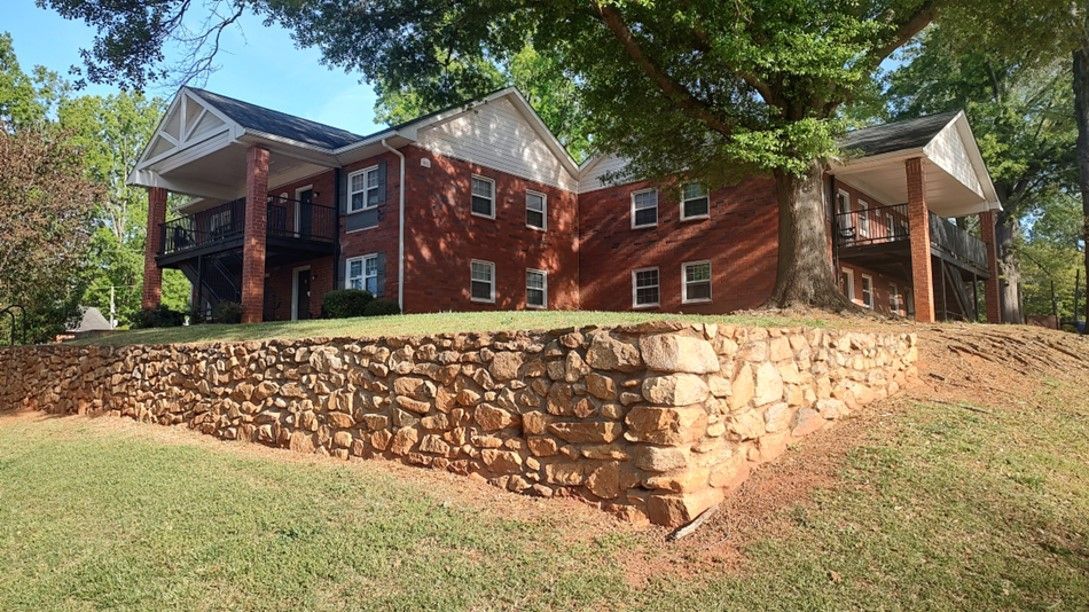
A prime example of this strategy in action is Vista West III in Greenville's Berea neighborhood. Affordable Upstate took over two aging complexes and oversaw a massive $4.2 million preservation effort. They replaced outdated plumbing, updated electrical systems, added structural repairs, and installed brand-new appliances. The result? A complex that feels brand-new in almost every way, but remains priced strictly for households earning between 60% and 70% of the area's median income.
One of the biggest issues with standard real estate investing is displacement. When a regular developer buys an old complex, they often evict everyone, flip the units, and double the rent. Affordable Upstate operates with a socially responsible, mission-driven mindset.
During the intensive construction phase of Vista West III, we partnered with a local nonprofit to cover moving expenses and temporarily relocate 90% of the existing residents to other affordable housing. Once renovations were completed, residents were welcomed back into modernized, safer homes without being priced out of their neighborhood.
Why Socially Responsible Investing Matters
Affordable Upstate proves that you can balance a thriving real estate portfolio with a deep commitment to the community. By placing over $50 million of socially responsible investor equity into workforce housing assets, they have stabilized more than1,450 units across the region.
As Greenville continues to grow, preserving our workforce housing is no longer just an option.
It is an absolute necessity.
Diversify Your Portfolio with Commercial Real Estate Investments Opportunities

MORE FROM THE BLOG